Customs Broker Career Guide
What the job involves day to day, and how people get into it.
Customs Broker License
How to become a licensed customs broker: who can sit CBP’s exam, how many pass, what the fees add up to and how you keep the license.
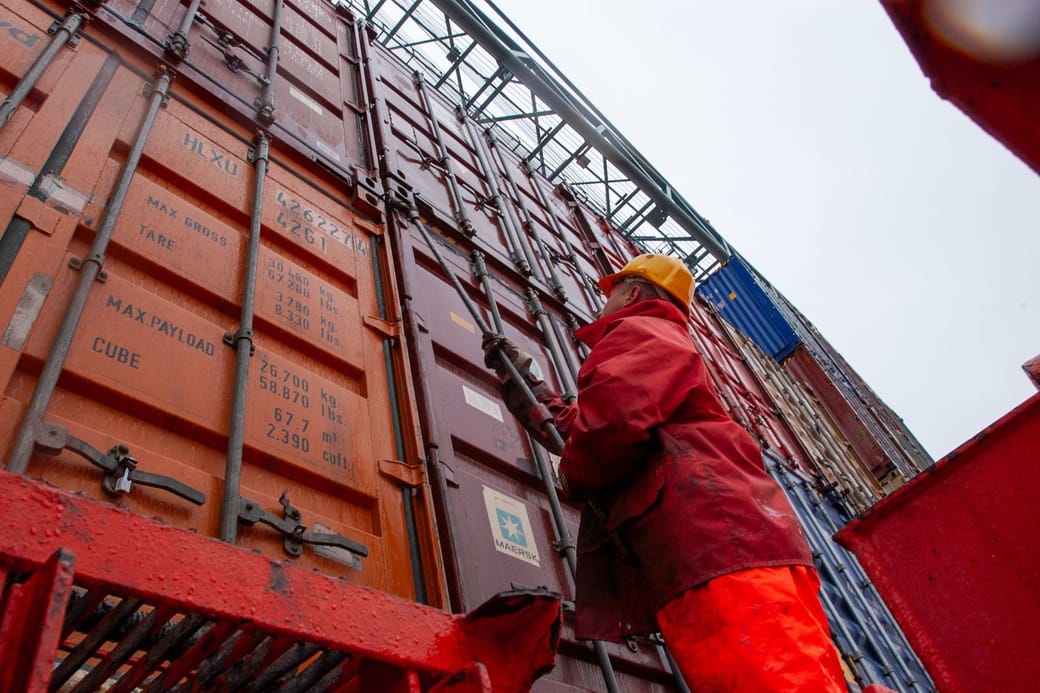
A customs broker license is the credential U.S. Customs and Border Protection (CBP) issues to people and companies who clear imports for someone else. A licensed broker files the entry, classifies the goods under the tariff schedule, works out the duty and pays it to CBP on the importer’s behalf, and charges a fee for doing so. Without the license, that work is open only to the importer itself.
The license belongs to a person first. A brokerage company holds its own license too, but CBP requires every company license to be backed by at least one licensed individual among its officers or partners. CBP counts 14,454 active licensed brokers in the United States.
CBP sets two sets of conditions, one for the exam and a stricter one for the license:
That gap means you can pass at 18 and apply once you turn 21, as long as it is within three years of the passing letter. CBP asks for no degree and no work experience.
If you will work for a brokerage that already holds a national permit, the license is the end of it: CBP says an employee doing customs business for a licensed employer needs no permit of their own. Brokers who set up on their own also need a national permit (see the cost table).
The Customs Broker License Exam (CBLE) is given twice a year, on the fourth Wednesday of April and October. The next one is on October 28, 2026. It has 80 multiple-choice questions and runs 4.5 hours on a computer. A passing score is 75 percent, which is 60 correct answers.
It is open book, and the books are the law itself. CBP usually lists these reference materials, with the editions set for each exam:
CBP groups the questions into categories that include entry and entry summary, classification, valuation, appraisement and duty assessment, broker compliance and practical exercises. Classification and valuation are the core of the job: finding the right line in the tariff schedule for a product and working out the value the duty is charged on. CBP posts past exams with their answer keys and a sample exam about ten weeks before each sitting, and many candidates prepare with them.
CBP publishes a pass rate for each exam, counted before appeals are decided:
| Exam | Passed Before Appeals |
|---|---|
| April 22, 2026 | 22% |
| October 22, 2025 | 12% |
| April 23, 2025 | 30% |
CBP, Customs Broker License Exam page, read October 9, 2026.
Across the last three exams the rate ran from 12% to 30%. In other words, most people who sit it fail. The figure moves a lot from one exam to the next, so a single sitting says little about the next one.
Starting with the April 2026 exam, only people who come close can appeal. You need at least 57 of 80 correct, within three questions of passing, and you can then appeal up to four questions. First appeals are due 60 days after the results letter.
CBP set the line from its own records: 97 percent of people who passed on a first appeal had been three questions or fewer from passing. Anyone below 57 retakes the exam instead, and pays the $390 fee again.
All of CBP’s fees, from the exam to running your own brokerage:
| Fee | When | Amount |
|---|---|---|
| Exam | Each time you sit it | $390 |
| Individual license application | Once, after passing | $300 |
| Fingerprint processing | With the application | $10 |
| Triennial status report | Every three years | $100 |
| National permit application | Once, to run your own brokerage | $100 |
| National permit user fee | Every year, with a permit | $190.88 |
| Company license application | Once, for a brokerage company | $500 |
CBP, Customs Broker Fees, read October 9, 2026. The permit fee is the rate from October 1, 2026.
For someone who will work for an existing brokerage, getting licensed costs $700 in CBP fees if they pass the first time, plus $390 for each retake. Setting up on your own adds $290.88 for the permit in its first year. Prep courses are a separate cost, sold by private firms and trade associations, not by CBP.
Every three years each licensed broker files a triennial status report on eCBP and pays $100. Individual brokers also certify 20 hours of continuing education, taken from CBP-accredited providers, and keep the certificates for three years in case of an audit. The current cycle’s credits are due by January 31, 2027, and the report window runs December 14, 2026 to February 28, 2027.
Missing either one gets the license suspended and then revoked by operation of law, and a revoked license can’t be reinstated. A broker who isn’t using the license can suspend it voluntarily instead, which still requires the report but not the education hours.
No. CBP sets no education requirement at any step, and the exam tests the tariff schedule and the regulations rather than coursework. The degree helps with the job around the license: trade compliance, international logistics and how goods move through ports. The customs broker career guide covers how people get into the work, and the bachelor’s in supply chain management ranking covers the degree route for anyone who wants both.
Hard by any measure. CBP reports a 22% pass rate for the April 22, 2026 exam before appeals, and 12% for October 22, 2025. It is open book, but 80 questions in 4.5 hours on the tariff schedule and the customs regulations leaves little time to look things up.
For an individual, $700 in CBP fees: $390 for the exam, $300 for the license application and $10 for fingerprint processing. After that, $100 every three years for the status report. Prep courses are extra and are sold privately.
CBP gives the exam on the fourth Wednesday of April and October. The next is October 28, 2026. Registration opens about ten weeks before the exam and closes about six weeks before, on CBP’s eCBP portal.
18 to sit the exam and 21 to apply for the license. Either way you must be a U.S. citizen and not a federal employee.
3 years from the date on your passing letter. After that you have to pass the exam again.
No. CBP sets no education requirement for the exam or the license. A degree in supply chain management or international business covers the trade side of the work, but the license is what lets you file entries for clients.
What the job involves day to day, and how people get into it.
What customs work pays, and which figures stand in for it.
The job on the other side of the border paperwork.
The degree route into trade and logistics work, ranked.