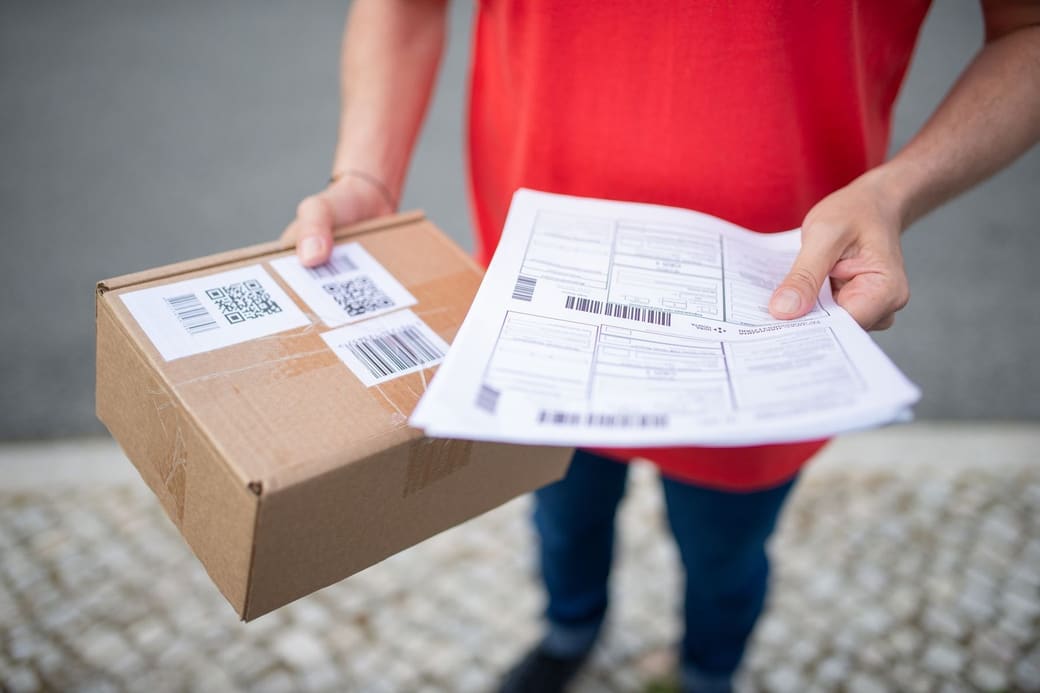
- The core task: pay, or arrange for payment of, taxes and duties on shipments. It heads the task list in the next section.
- Typical entry education: bachelor's degree. 35% of survey respondents say a new hire needs a bachelor’s degree.
- Related work experience at entry: none. On-the-job training: moderate-term on-the-job training.
- Median pay for compliance officers: $80,730. The 10th to 90th percentiles run $48,220 to $133,720.
- Projected change through 2035: 3.8%. Annual openings: about 32,700.
A customs broker does the legal work of getting imported goods through U.S. customs on behalf of the importer. O*NET’s task list: classifying goods under the tariff coding system, calculating the duties and taxes owed and arranging payment, preparing and processing import and export documentation under customs regulations, and clearing the goods to their destination.
It is the one job on this site that is licensed by examination. CBP licenses brokers to conduct customs business for others, and the exam is open book on the tariff schedule and the customs regulations themselves. Staying current is part of the work: O*NET lists keeping up with changes in import and export law among the core tasks.
The tasks O*NET rates most important for customs brokers:
- Pay, or arrange for payment of, taxes and duties on shipments.
- Classify goods according to tariff coding system.
- Clear goods through customs and to their destinations for clients.
- Prepare and process import and export documentation according to customs regulations, laws, or procedures.
- Stay abreast of changes in import or export laws or regulations by reading current literature, attending meetings or conferences, or conferring with colleagues.
- Calculate duty and tariff payments owed on shipments.
Job titles in the same O*NET occupation: Broker, CCS, Corporate Licensed Broker, LCB and LCB. Source: O*NET
OnLine, 13-1041.08, read 2026-09-23.
O*NET’s task list for customs brokers is mostly classification and calculation: classifying goods under the tariff coding system, calculating the duties and tariffs owed on shipments, paying or arranging payment of taxes and duties, and preparing and processing import and export documentation under customs regulations.
The result is goods cleared through customs and on to their destination for the client. Around it sits keeping current: O*NET lists staying abreast of changes in import and export law, through reading, meetings and colleagues, among the core tasks.
CBP describes the job the same way in its own rules: licenses are issued to conduct customs business on behalf of other persons, under the Tariff Act and Part 111 of the CBP regulations.
Main Responsibilities
- Classify imported goods under the tariff coding system
- Calculate duties and tariffs owed
- Pay or arrange payment of duties and taxes
- Prepare and file import and export documentation
- Clear goods through customs for clients
- Keep current with changes in trade law and regulation
Who They Work With
Importers, who must give a broker power of attorney directly under CBP’s rules, freight forwarders who move the goods, and CBP itself.
Where And When They Work
Office work at brokerages, forwarders and importers. In the OEWS data, compliance officers work in freight transportation arrangement, the industry customs brokerage belongs to, alongside government, finance and healthcare.
The biggest employers of compliance officers, by the Handbook's count:
government, excluding state and local education and hospitals (35%), finance and insurance (12%), professional, scientific, and technical services (9%), healthcare and social assistance (8%) and manufacturing (5%).
Sources: O*NET OnLine, 13-1041.08, tasks; U.S. Customs and Border Protection (CBP). Read 2026-09-23.
BLS publishes no wage for customs brokers. O*NET files them inside compliance officers, an occupation that spans government, finance and healthcare, so this page leads with compliance officers working in freight transportation arrangement, the industry customs brokerage belongs to, and labels the whole-occupation figures as what they are.
Among compliance officers working in freight transportation arrangement, the industry customs brokerages belong to, the median is
$62,880 a year across 4,520 jobs, with the 10th to 90th percentile running
$45,010 to $116,890.
Source: BLS OEWS, May 2025, national industry-specific
estimates. The figure is for compliance officers working in that
industry, not for the job title alone. Read 2026-09-23.
Across all industries, the median for compliance officers is $80,730 a year. The middle half
earns $61,280 to $109,010, and the full range runs from $48,220 at the 10th percentile to $133,720 at the 90th, across
417,070 jobs. The customs broker salary page breaks that down by state, metro area,
industry and employer type.
Source: BLS OEWS, May 2025, national. Read 2026-09-23.
O*NET’s respondents most often named a bachelor’s degree, then a high school diploma, for what a new hire needs. The license, not the degree, is the gate: CBP sets its own eligibility for the exam and the license, set out below. A supply chain or international business degree covers the trade and logistics side of the work.
What BLS Says Entry Takes
Typical entry requirements for Compliance Officers, BLS Employment Projections | Typical entry education | Bachelor's degree |
|---|
| Related work experience | None |
|---|
| On-the-job training | Moderate-term on-the-job training |
|---|
The license. CBP sets the conditions to sit the exam and to be licensed, below. O*NET’s respondents most often named a bachelor’s degree for what a new hire needs.
Majors
International business, supply chain management and logistics cover the trade side; the exam itself tests the tariff schedule and customs regulations directly.
Degree Levels That Lead In
What O*NET's respondents in the occupation said a new hire needs:
Education a new hire needs, O*NET 13-1041.08, top three answers | Education Level | Share Of Respondents |
|---|
| Bachelor’s degree | 35% |
|---|
| High school diploma or equivalent | 30% |
|---|
| Post-secondary certificate | 15% |
|---|
Sources: BLS Employment Projections, Table 1.2 (entry
requirements); O*NET OnLine, 13-1041.08, education section, top three
answers. The O*NET figures are survey responses from workers in the occupation, not a legal requirement.
U.S. Customs and Border Protection (CBP)
Customs Broker License
Anyone conducting “customs business” on behalf of another person: licenses are issued to individuals, corporations, partnerships and associations under 19 U.S.C. 1641 and Part 111 of the CBP regulations.
- Sit the Customs Broker License Exam (CBLE). CBP requires examinees to be U.S. citizens, at least 18, and not employed by the federal government on the exam date.
- The exam is electronic and open book: 80 multiple-choice questions in 4.5 hours, with a score of 75 percent required to pass.
- Apply for the license within three years of passing. An individual licensee must be a U.S. citizen, at least 21 when applying, not a federal officer or employee, and of good moral character.
Keeping it. Every three years a broker files a triennial status report with a $100 fee, and individual license holders certify 20 hours of continuing education from CBP-accredited providers.
Source: U.S. Customs and Border Protection (CBP), read 2026-09-23.
Sources: titles from
O*NET OnLine; the licensing rules from U.S. Customs and Border Protection (CBP).
- Freight Forwarder. Forwarders prepare the shipments and documents a customs broker clears.
- Procurement Specialist. Importers’ buyers rely on the broker’s duty calculations to know what goods really cost.
- Logistician. The planning role for the international supply chains customs clearance sits in.
The qualities the Handbook names as important for compliance officers:
- Attention to detail. Classification and duty calculation leave little room for error.
- Analytical skills. Reading tariff schedules and regulations against real shipments.
- Communication. Explaining duties and rules to importers.
- Integrity. CBP requires good moral character of every licensee.
O*NET lists the software the occupation uses and flags the technologies employers name most often in their job postings. For
customs brokers, the ones it marks as in demand are Microsoft Outlook, Microsoft Office software, Microsoft PowerPoint, Microsoft Excel and Microsoft Word.
Source: O*NET OnLine, 13-1041.08, Software Skills. "In demand" and "hot" are
O*NET's own flags, based on how often employers name the technology in job postings. Read 2026-09-23.
BLS projects employment of compliance officers to grow 3.8% over 2025 to 2035,
from 436,400 to 453,100 jobs. That is about the pace projected for all occupations, 3.5%.
BLS expects about 32,700 openings a year. Of those, 13,200 (40%)
replace people leaving the labor force, 17,900 (55%) replace people
moving to other occupations, and 1,600 (5%) are new jobs. The
customs broker salary page sets out what BLS says is driving demand.
Sources: BLS Employment Projections, 2025-35;
EP Table 1.10. New jobs is total openings minus
separations. Read 2026-09-23.
What Degree Do You Need To Be A Customs Broker?
BLS lists a bachelor's degree as the typical entry education for compliance officers. In O*NET's survey of the occupation, 35% of respondents said a new hire needs a bachelor’s degree, and 30% said a high school diploma or equivalent.
How Long Does It Take To Become A Customs Broker?
BLS lists no related work experience as typical for entry, so the degree is the main time cost, followed by moderate-term on-the-job training.
How Much Does A Customs Broker Make?
BLS publishes no wage for customs brokers. O*NET files them inside compliance officers, an occupation that spans government, finance and healthcare, so this page leads with compliance officers working in freight transportation arrangement, the industry customs brokerage belongs to, and labels the whole-occupation figures as what they are. The median for compliance officers is $80,730 a year (BLS OEWS, May 2025), with the 10th to 90th percentile running $48,220 to $133,720.
Is Customs Broker A Good Career?
On the federal numbers: a median of $80,730, and BLS projects the occupation to grow 3.8% from 2025 to 2035, against 3.5% for all occupations, with about 32,700 openings a year.
How Do You Become A Customs Broker?
Pass CBP’s Customs Broker License Exam, then apply for the license within three years. CBP requires examinees to be U.S. citizens, at least 18 and not federal employees, and licensees to be at least 21 and of good moral character.
How Hard Is The Customs Broker Exam?
CBP’s format: 80 multiple-choice questions in 4.5 hours, open book, with 75 percent required to pass. The books allowed include the Harmonized Tariff Schedule and Title 19 of the Code of Federal Regulations.
Do Customs Brokers Need Continuing Education?
Yes. Every three years a broker files a triennial status report with CBP, and individual license holders certify 20 hours of continuing education from CBP-accredited providers.
Pay for compliance officers by state, metro area and industry.
Programs read from each school’s own page, with tuition where the school states it.
Programs read from each school’s own page, with tuition where the school states it.
13 careers, each tied to the BLS occupation its pay comes from.