Supply Chain Certifications Compared
CSCP, CPIM, CLTD and CPSM side by side.
CLTD Certification
The APICS logistics certification: the nine topics, how the one exam works, what it costs and which logistics jobs cite it.
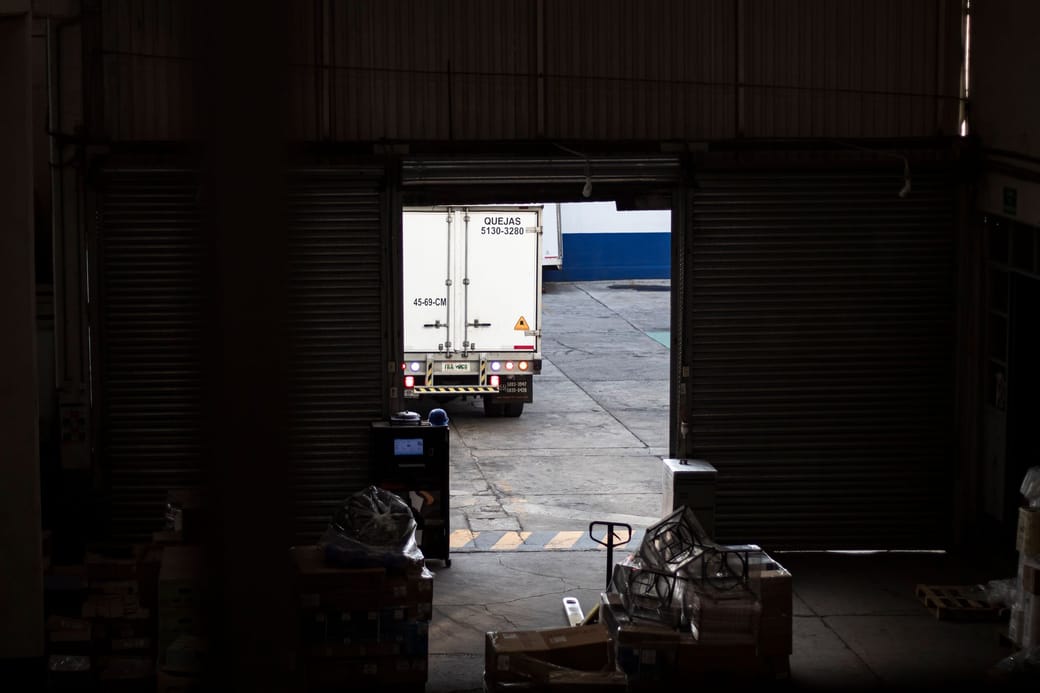
The CLTD, Certified in Logistics, Transportation and Distribution, is the ASCM certification for logistics: the movement and storage of goods between the supplier and the customer, and back again. It covers logistics specifically: logistics strategy, demand and capacity, customer and order management, warehouse and fulfillment center management, inventory, transportation, global logistics, reverse logistics and risk, and network design.
People whose work is the movement and storage of goods: transportation, warehousing and fulfillment, order management and logistics network design, where the make, deliver and return steps of the supply chain meet.
Of ASCM’s three certifications on this site, it is the one built on logistics, which makes it the usual answer to “which logistics certification?”
ASCM lists the CLTD content under nine topics, all tested on the one exam:
The list runs from the logistics plan down to the flows themselves: strategy and capacity first, then orders, warehouses, inventory and transportation, then the global, reverse and network questions that tie them together. ASCM offers a free 30-day trial of one module of its learning system before you buy.
One exam of 150 questions (130 scored, 20 unscored pretest) in 3.5 hours, scored from 200 to 350, with 300 or more passing. It is taken at a Pearson VUE center or online. The content runs across nine modules.
ASCM membership is optional, though members pay less. You buy an authorization to test, which expires six months after purchase (12 months when bought in a bundle), and ASCM recommends about 100 hours of study per exam. A candidate who fails must wait 14 full days before retaking the same exam.
None. ASCM sets no education or experience requirement; anyone can buy an authorization to test. That is ASCM’s own rule, set out in its exam handbook, so a student or someone new to logistics can sit the CLTD before holding a logistics job. ISM’s CPSM works the other way: it is awarded only after professional experience.
ASCM lists the CLTD exam at $1,100 for members with its certification upgrade and $1,530 for everyone else. The membership with the upgrade is $199 a year, so a nonmember who joins first pays $1,299 in all, $231 less than the nonmember price.
Stays valid while you earn 75 professional development points every five years. Holders aged 62 or older can convert a current certification to a lifetime designation, which ends the five-year maintenance cycle.
This site’s career guides name the CLTD for five jobs. BLS reports pay by occupation, and some of these jobs are counted inside a wider one, so each figure names the occupation it describes:
The medians describe the occupation, not what a CLTD adds to it.
The APICS guide covers what became of the APICS name, and the four-way comparison sets all four certifications side by side.
Both are ASCM exams in the same format, kept current the same way. The difference is scope: the CLTD spends all nine of its topics on logistics, while the CSCP covers the whole supply chain and gives logistics one module of eight. CSCP costs more: $1,450 for members against $1,100. Someone whose work is warehouses, freight and distribution is in CLTD territory; someone whose job spans sourcing, planning and delivery is in CSCP’s.
The two answer different questions. A CLTD certifies one body of knowledge in one exam; a degree spans a business school curriculum and takes years. ASCM requires no degree for the CLTD, and passing it doesn’t stand in for one. If you are weighing a degree, the logistics degree ranking lists bachelor’s and master’s programs named for logistics, and the certificate ranking covers shorter graduate programs.
Certified in Logistics, Transportation and Distribution. It is awarded by the Association for Supply Chain Management (ASCM), whose testing rules are still published as the APICS Exam Handbook, which is why it is often called the APICS CLTD.
ASCM lists the exam at $1,100 for members with its certification upgrade and $1,530 for everyone else. The membership with the upgrade is $199 a year, so joining first comes to $1,299. The bundle with the learning system and a second-chance exam is $1,980 for members.
No. ASCM sets no education or experience requirement; anyone can buy an authorization to test.
ASCM recommends about 100 hours of study for the exam, and an authorization to test is good for 6 months from purchase (12 when bought in a bundle). The credential is awarded on passing one exam.
It certifies logistics knowledge in one exam, for $1,100 to $1,530. The jobs that cite it are logistics jobs, and BLS reports pay by occupation, so the pay figures on this page describe those jobs rather than the credential.
CSCP, CPIM, CLTD and CPSM side by side.
ASCM’s end-to-end credential, with logistics as one module of eight.
The logistics job the CLTD maps to most directly.
Bachelor’s and master’s programs named for logistics, ranked.