Supply Chain Management Degrees
The degree at every level, and where to start comparing programs.
Supply Chain Management Explained
The field in plain terms: what the federal definition covers, who does the work, and what you study to get into it.
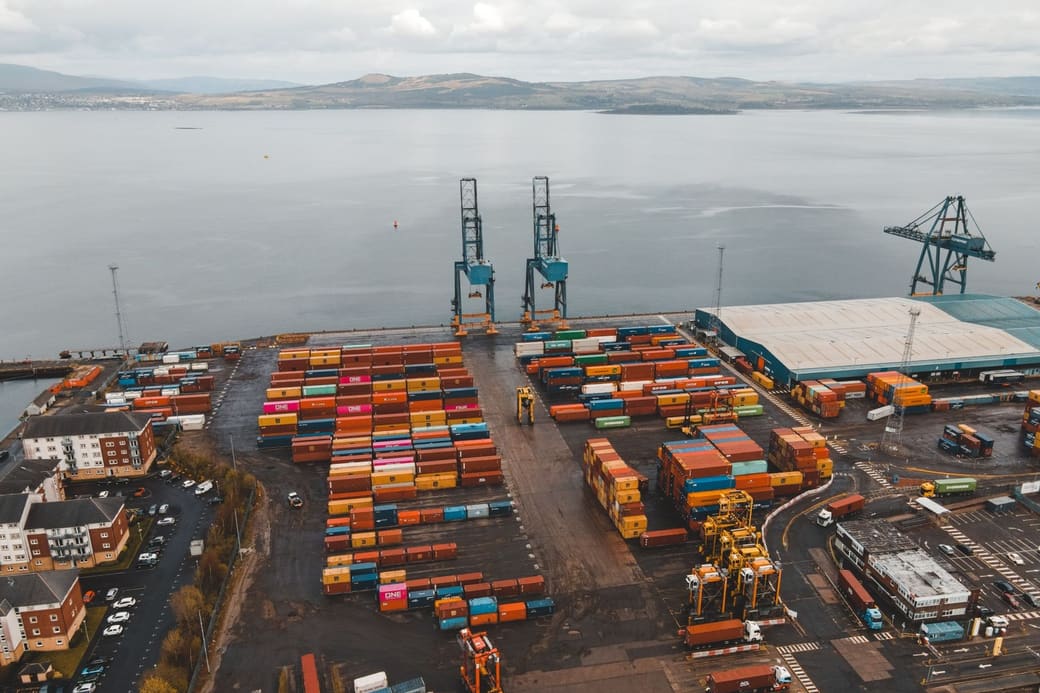
What is supply chain management, in a sentence? It is the work of getting a product from raw materials to the customer: buying what the business needs, planning how much to make and hold, making it, and moving and storing it until it is delivered. The job is to do all of that at the lowest cost that still gets the product there on time, and to keep the steps working together when something in the chain goes wrong.
The federal government’s definition of the field of study says the same thing in formal terms. The National Center for Education Statistics files supply chain degrees under CIP 52.0203, Logistics, Materials, and Supply Chain Management, and defines it as “A program that prepares individuals to manage and coordinate all logistical functions in an enterprise, ranging from acquisitions to receiving and handling, through internal allocation of resources to operations units, to the handling and delivery of output.”
No single job covers the whole chain. The work splits into parts, and BLS counts the people who do each part in its own occupation. Median pay is the BLS figure for each occupation:
Choosing suppliers, negotiating prices and contracts, and ordering what the business needs.
Career guides: Purchasing Manager, Procurement Specialist
Forecasting demand, setting inventory levels and scheduling production and shipments.
Career guides: Logistician, Supply Chain Analyst, Production Planner
Running the plants and production lines that turn materials into products.
Career guide: Industrial Production Manager
Running warehouses, fleets and distribution, and arranging freight.
Career guides: Supply Chain Manager, Warehouse Manager, Transportation Manager, Freight Broker, Freight Forwarder
Building the models behind routing, scheduling and inventory decisions.
Career guide: Operations Research Analyst
Clearing goods through customs and keeping shipments within trade rules.
Career guide: Customs Broker
BLS OEWS, May 2025. Some occupations reach well beyond supply chain: BLS publishes no separate wage for customs brokers. They are counted inside compliance officers, an occupation that spans government, finance and healthcare, so figures for the whole occupation describe far more than customs work.
The supply chain manager is the person answerable for the parts working together. O*NET, the Labor Department’s occupational database, lists these as the most important tasks for supply Chain Managers:
That list moves between the parts: staffing a warehouse, purchasing and inventory, transportation routes, and the measures that show whether the chain is performing. BLS counts supply chain managers among transportation, storage and distribution managers, the moving-and-storing occupation above. The supply chain manager career guide covers how people reach the job, and the salary page what it pays.
Supply chain work happens wherever goods are bought, made or moved, which is nearly every industry. BLS’s Occupational Outlook Handbook gives the largest employers for each occupation. For the managers who run warehouses, fleets and distribution, the biggest are transportation and warehousing (30%), wholesale trade (15%) and manufacturing (13%). For logisticians, they are manufacturing (22%), professional, scientific, and technical services (15%) and federal government (14%).
The spread is the practical point. A supply chain degree isn’t training for one kind of company: the same skills run a manufacturer’s inbound materials, a retailer’s distribution network and a government agency’s logistics.
NCES lists what a program in the field includes: acquisitions and purchasing, inventory control, storage and handling, just-in-time manufacturing, logistics planning, shipping and delivery management, transportation, quality control, resource estimation and allocation and budgeting. It gives Logistics Management, Materials Management, Acquisition Logistics and Supply Management as examples of programs filed under the same code, so a degree with any of those names is the same field of study.
The degree comes at every level. This site’s directory lists 355 supply chain programs at 239 schools with AACSB or ACBSP accreditation: 15 associate, 197 bachelor’s, 123 master’s and 20 doctorate.
Two professional bodies set the field’s credentials. The Association for Supply Chain Management (ASCM) awards CSCP, CPIM and CLTD, and the Institute for Supply Management (ISM) awards CPSM. The credentials map onto the parts of the work:
The certifications guide compares who can sit each and what it costs.
Most routes in start with a degree. The bachelor’s ranking and the online degree ranking cover the first degree, and the master’s and MBA rankings cover graduate study, each with tuition read from the school’s own page.
If you are still deciding whether the field is for you, the career outlook guide sets out pay, growth and openings on the federal numbers, and the career guides describe each job day to day.
It is the work of getting a product from raw materials to the customer: buying what is needed, planning how much to make and hold, making it, and moving and storing it until it is delivered, at the right cost and on time.
O*NET lists tasks such as: determine appropriate equipment and staffing levels to load, unload, move, or store materials; manage activities related to strategic or tactical purchasing, material requirements planning, controlling inventory, warehousing, or receiving; select transportation routes to maximize economy by combining shipments or consolidating warehousing and distribution. The supply chain manager career guide covers the job in full.
Median pay across the BLS occupations that make up supply chain work runs from $52,260 to $148,080, with the management occupations at the top. Each has its own salary page on this site.
Both. It is a field of study, filed by the federal government as CIP 52.0203, and it is the work that field prepares you for, spread across several occupations from buyers to logisticians to production managers.
The degree at every level, and where to start comparing programs.
Every job in the field, with the degree path into it.
Where one field ends and the other begins.
Pay, growth and openings on the federal numbers.