What Is A 3PL?
The outside firms that run many cross-docks and warehouses for the companies that own the goods.
What Is Cross Docking
How freight crosses the dock without being stored, why companies do it, how it differs from warehousing and transloading, and who runs it.
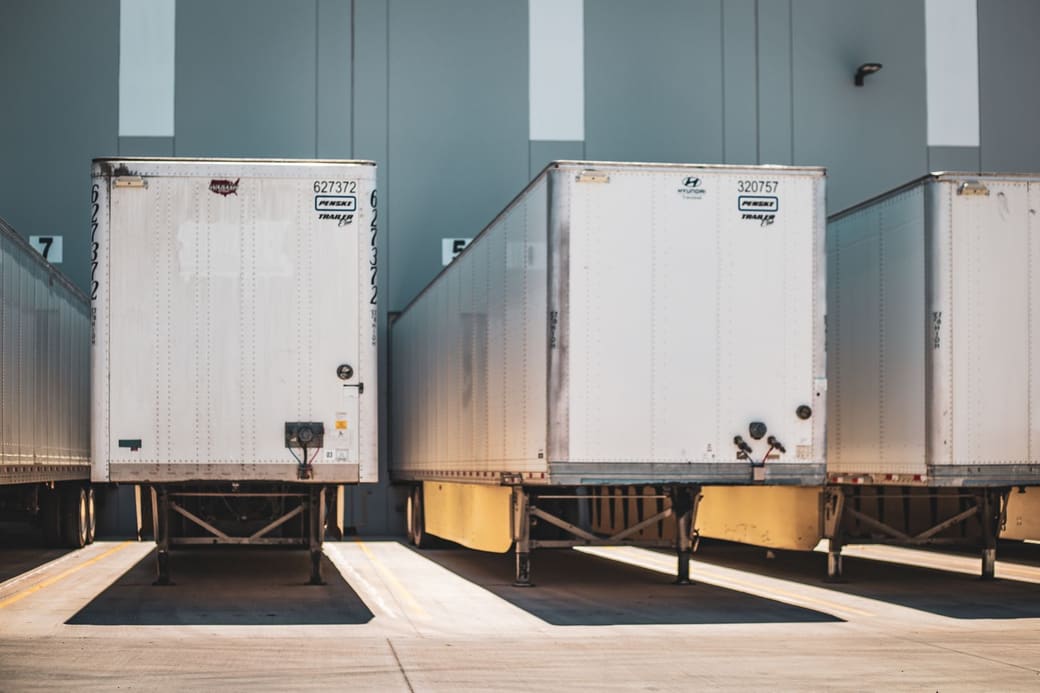
Cross docking is a way of running a freight facility so that goods move from the trucks that bring them to the trucks that take them away without being stored in between. Freight comes off an inbound trailer, is sorted by where it is going, and goes straight onto an outbound trailer bound for that place. The building that does this is called a cross-dock, because the freight crosses the dock from one side to the other.
Georgia Tech’s John J. Bartholdi III and Steven T. Hackman open their textbook chapter on the subject by calling crossdocks “high speed warehouses.” That is the shortest accurate definition. A warehouse holds goods until someone orders them; a cross-dock handles goods that have already been ordered, so the only job left is to get them onto the right truck.
How long is “without being stored”? Jean-Paul Rodrigue’s The Geography of Transport Systems puts it plainly: “Shipments typically spend less than 24 hours in the distribution center.” For parcels the stay can be under an hour.
A cross-dock is a long, narrow building with dock doors down both sides. The textbook describes a high-volume one as “a slab of concrete with a roof and walls punctuated with doors for trailers.” There is little racking and a lot of material handling equipment: forklifts and pallet jacks for pallets, carts for loose cartons, and in the largest terminals a dragline, a chain in the floor that pulls carts around the dock.
The doors come in two kinds, and the split never changes once it is set:
A shift on the dock follows the same loop:
The dock supervisor decides, in real time, which inbound trailer goes to which receiving door. The textbook counts that choice, along with which doors are labeled for which destinations, among the few things that change a dock’s workload without changing the building.
Bartholdi and Hackman give the biggest reason as cutting transportation cost. A supplier shipping a few pallets to each of fifty stores would send fifty small, expensive shipments. Sent instead as one full trailer to a cross-dock, the same freight is sorted by store there and combined with other suppliers’ freight for the same stores, so each store’s delivery fills a truck too.
Their example is The Home Depot, which had vendors send full trailers to its crossdock, where product was sorted out by store and combined with other vendors’ product bound for the same stores. The book lists two further benefits: less inventory, because product flows straight through, and less labor, because nothing has to be put away and later picked back out.
That last point is the one warehouse managers notice. In a storage warehouse, putting stock away and picking it again for orders is where most of the labor goes. A cross-dock skips both steps, which is why the chapter calls its issues ones of material handling and flow rather than of storage location.
Rodrigue lists the settings where cross docking is used. Together they are the usual answer to “what are the types of cross docking”:
| Setting | What The Cross-Dock Does |
|---|---|
| Manufacturing | Inbound parts are consolidated and staged for just-in-time assembly, sorted by the stage of the line that needs them. |
| Distribution | Products from several suppliers are combined and sent on once the last inbound shipment arrives. |
| Motor carriers | Small shipments from many shippers are consolidated into full truckloads, and empty trucks can pick up a backhaul on the way back. |
| Retail | Goods from many suppliers or distribution centers are sorted into outbound loads for individual stores. |
| Air cargo | Flights arrive in a window, cargo is sorted and loaded onto departing flights, so fewer aircraft serve more city pairs. |
| E-commerce | A sortation center assigns parcels from several fulfillment centers to the postal codes of one metro area. |
Paraphrased from Jean-Paul Rodrigue, The Geography of Transport Systems, sixth edition (2024).
The common thread is that the goods arrive already assigned to a customer, a store, a production line or a delivery area. That is what lets them skip the shelf.
A warehouse and a cross-dock can look alike from the yard. The difference is what happens inside:
| Compared | Cross-Dock | Warehouse |
|---|---|---|
| Goods arrive | Already assigned to a destination | Ahead of demand, to be sold later |
| Time inside | Usually under a day | Until the goods are ordered |
| The building | Long and narrow, doors on both sides, little racking | Deep, with racking and aisles |
| Main labor | Unloading, sorting and loading | Putting away and picking orders |
| What is managed | Flow and door assignments | Inventory and storage locations |
Many buildings do both. A retailer’s distribution center can cross-dock fast-moving goods that are already allocated to stores and store everything else. When people search for a “cross docking warehouse,” they usually mean a warehouse that offers cross docking as a service alongside storage.
The two terms get used for each other, but they solve different problems. Cross docking changes where freight is going: it sorts many origins into many destinations, usually truck to truck. Transloading changes how freight travels: it moves loads from one mode to another, most often between truck and rail.
Rodrigue describes the transloading pattern. A producer trucks its freight to a nearby rail terminal, where truckloads are combined into a train bound for a terminal about 150 to 200 miles from its customers; there the loads are broken down and trucked the last stretch. He gives about 600 miles as the shortest rail haul at which it usually pays. Transload sites often add storage, packaging and labeling, which a pure cross-dock does not.
In practice the line blurs. A transload terminal sorts freight for its outbound trucks, which is cross docking in all but name.
Cross-dock layout is a research field, and the findings are practical. These come from the textbook’s design section and from Bartholdi and Gue’s paper on dock shape:
It is also why a dock supervisor with a feel for door assignments is worth a great deal: the same building moves more freight with fewer steps.
Cross docking trades storage for timing. That trade fails in a few predictable situations:
The largest users of cross-docks are less-than-truckload carriers, which move shipments too small to fill a trailer on their own. The Census Bureau’s industry definition describes how they work: “LTL carriage is characterized as multiple shipments combined onto a single truck for multiple deliveries within a network.” It lists their network activities as local pick-up, local sorting and terminal operations, line-haul, destination sorting and terminal operations, and local delivery. Those sorting terminals are cross-docks: freight picked up locally is sorted onto line-haul trailers, and at the far end sorted again onto local delivery trucks.
BLS counts jobs in that industry every month. LTL trucking employed 247,400 people in July 2026, about where it was in July 2016 (247,200), after peaking in 2022 and falling back. Over the same ten years, warehousing and storage grew 96%:
| Year | LTL Trucking | Warehousing And Storage |
|---|---|---|
| 2016 | 247,200 | 935,900 |
| 2017 | 249,400 | 1,029,200 |
| 2018 | 262,600 | 1,141,900 |
| 2019 | 268,000 | 1,240,600 |
| 2020 | 244,300 | 1,386,600 |
| 2021 | 264,100 | 1,701,900 |
| 2022 | 278,200 | 1,920,200 |
| 2023 | 267,600 | 1,821,400 |
| 2024 | 252,100 | 1,871,100 |
| 2025 | 249,100 | 1,869,300 |
| 2026 | 247,400 | 1,838,500 |
BLS Current Employment Statistics, all employees, seasonally adjusted, series CES4348412201 and CES4349300001. July each year; later 2026 months were still preliminary when read.
The counts take in everyone on each industry’s payroll, drivers and office staff included, and neither industry is made up only of cross-docks. What the table does show is that the growth of the last decade went into buildings that store goods, while the LTL networks that sort them hold about the same number of people they did ten years ago.
On the floor, a cross-dock is staffed by dock workers who unload and load trailers, forklift operators, and yard drivers who move trailers between the doors and the lot. Dock supervisors run each shift and make the door assignments. Above them are terminal and distribution managers, and logisticians who plan the network the dock serves.
BLS publishes pay for the two management and planning occupations inside each industry where cross-docks run. These are medians for the occupation in the industry, not for a job at a cross-dock:
| Occupation | Truck Transportation | Warehousing And Storage | Couriers And Express Delivery | All Industries |
|---|---|---|---|---|
| Transportation, storage and distribution managers | $98,800 | $99,330 | $118,100 | $107,230 |
| Logisticians | $65,530 | $68,590 | $63,340 | $82,320 |
BLS OEWS, May 2025: national medians, and the industry columns from its industry-specific estimates (484000, 493100, 492100).
Managers earn the most in couriers and express delivery, the parcel networks, at $118,100, above the occupation’s $107,230 median. In trucking and warehousing they earn below it. Logisticians earn below their occupation’s $82,320 median in all three. The warehouse manager salary guide and the logistician salary guide break the pay down by state and industry.
Dock supervisors often come up from the floor. For the managers, BLS lists a high school diploma as the typical entry education with 5 years or more of related work experience, so the usual route is up through the dock, the yard or dispatch. The warehouse manager guide covers that path and what speeds it up.
The planning side asks for more school. BLS lists a bachelor's degree as the typical entry education for logisticians, and the logistician guide covers the work and the degree route. A major in logistics or supply chain management is the usual degree for that route; the logistics degree rankings list the bachelor’s and master’s programs named for the field.
Unloading freight from one truck and loading it straight onto another, sorted by where it is going, without putting it on a shelf first. The building in between is a sorting floor with dock doors, not a storage warehouse.
It means the shipment has been unloaded at a sorting terminal and is waiting to be loaded onto the truck for the next leg. The wording varies by carrier. A shipment usually leaves a cross-dock within a day, so the next scan tends to follow soon.
Cross docking sorts freight between trucks to change where it is going. Transloading moves freight between two modes, most often truck and rail, to change how it travels. A transload facility near a rail line can also sort freight, so one site can do both.
It needs reliable timing and freight that already has a destination. When inbound trucks run late, outbound trucks wait or leave partly empty, and there is no stock on hand to cover the gap. Large docks also lose efficiency as traffic past the central doors grows.
Dock workers and forklift operators unload, sort and load freight. Dock supervisors decide which trailer goes to which door. Above them sit terminal and distribution managers, and logisticians who plan the network the dock serves.
The outside firms that run many cross-docks and warehouses for the companies that own the goods.
Who owns the freight on the truck, who pays the carrier, and who files the claim when a load is lost.
The management job over a dock or a distribution center, and the experience it takes.
The planning job behind the network a cross-dock serves: the degree path and the pay.
The bachelor’s and master’s programs named for logistics, ranked.