What Is Procurement?
The buying process that FOB terms get negotiated in, and the jobs that run it.
FOB Shipping Point vs. Destination
When title and risk pass under each term, who pays the carrier, who files the claim when a load is lost, and how the US term differs from the Incoterm.
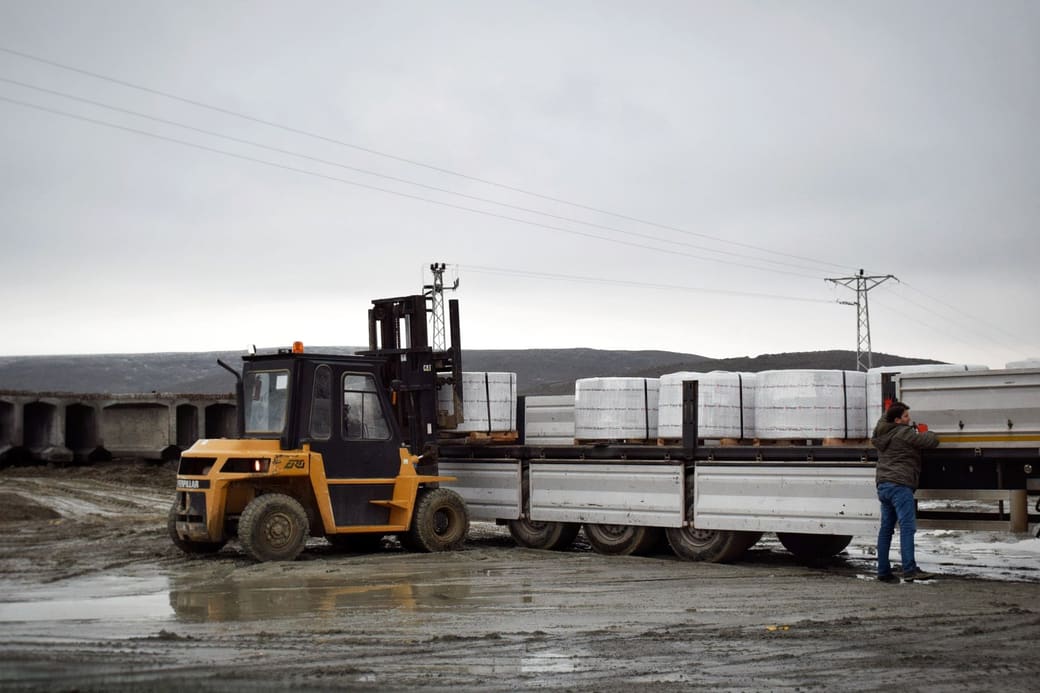
FOB stands for “free on board,” and you’ll also see “freight on board.” It’s the term in a sales contract that marks the spot where a shipment stops being the seller’s responsibility and starts being the buyer’s. The word “free” is misleading. Nothing about the goods is free. It means the goods get to that spot with no further charge or risk to the buyer.
In a US contract, the word after FOB does the work. FOB shipping point puts the spot at the start of the trip. FOB destination puts it at the end. The freight on the truck is the same either way. What changes is whose freight it is if the truck never arrives.
The Uniform Commercial Code, the model sales law behind US state statutes, spells out both terms. Under F.O.B. the place of shipment, the seller must “bear the expense and risk of putting them into the possession of the carrier.” Under F.O.B. the place of destination, the seller must “at his own expense and risk transport the goods to that place and there tender delivery of them.” Here’s what that looks like on the road:
FOB shipping point also called FOB origin
Passes when the seller puts the goods in the carrier’s possession.
FOB destination the seller’s risk until arrival
Passes when the goods are tendered at the named place.
Title usually moves at the same moment. UCC § 2-401 says that when the seller only has to send the goods, “title passes to the buyer at the time and place of shipment,” and when the contract requires delivery at destination, “title passes on tender there.” The contract can say otherwise, so read it. And the code’s version of the rule isn’t the last word on your deal, because states enact the UCC as their own law.
One detail catches people out: loading. Plain FOB shipping point covers getting the goods into the carrier’s possession. If the term reads “FOB vehicle” or “FOB car,” § 2-319 also has the seller load the goods on board at its own expense and risk.
| Compared | FOB Shipping Point | FOB Destination |
|---|---|---|
| Also called | FOB origin | FOB delivered |
| Risk passes | When the carrier has the goods | When the goods are tendered at the destination |
| Title passes (default) | At the time and place of shipment | On tender at the destination |
| Owner on the truck | Buyer | Seller |
| Files a freight claim | Buyer | Seller |
| Freight, with nothing added | Buyer | Seller |
| Buyer records inventory | When the goods ship | When the goods arrive |
UCC §§ 2-319 and 2-401 for risk and title; Hughes’s supplier terms for claims; OpenStax for inventory and default freight.
You’ll find the term in a box on the purchase order or the quote, and a full one answers three separate questions. Take this line apart before you sign anything:
FOB Destination, Freight Prepaid
Tells you this field sets the point where risk changes hands.
Says where that point is. The seller carries the risk until the goods get there.
Says who pays the carrier. Here the seller pays and doesn’t bill it back.
Watch for a city in place of the word. “FOB Memphis” means nothing until you know what’s in Memphis. If that’s the seller’s plant, it works as FOB shipping point. If it’s your warehouse, it works as FOB destination. And if it’s a hub in between, risk changes hands there, which few people intend. Ask for the term spelled out.
This is where most confusion starts. FOB settles who owns the goods and who carries the risk. A freight term settles who writes the check to the carrier, and it can point the other way. On FOB shipping point, freight prepaid, the seller pays the trucker while the buyer owns the load.
Six combinations come up most often on US purchase orders. To see the money move, take an invented shipment: $48,000 of goods and $1,200 of freight.
| Term | Pays Carrier | Bears Cost | Owns In Transit | Files Claims | Invoice | Buyer’s Total |
|---|---|---|---|---|---|---|
| FOB OriginFreight Collect | Buyer | Buyer | Buyer | Buyer | $48,000 | $49,200 |
| FOB OriginFreight Prepaid | Seller | Seller | Buyer | Buyer | $48,000 | $48,000 |
| FOB OriginFreight Prepaid and Charged Back | Seller | Buyer | Buyer | Buyer | $49,200 | $49,200 |
| FOB DestinationFreight Collect | Buyer | Buyer | Seller | Seller | $48,000 | $49,200 |
| FOB DestinationFreight Prepaid | Seller | Seller | Seller | Seller | $48,000 | $48,000 |
| FOB DestinationFreight Collect and Allowed | Buyer | Seller | Seller | Seller | $46,800 | $48,000 |
Terms from Hughes’s supplier guide, matching SPS Commerce. Dollar columns are our worked example, not market rates. Buyer’s total is the invoice plus any carrier bill the buyer pays directly.
Look at the last column. The buyer’s total only ever takes two values, because in the end someone bears the $1,200. The other words decide who fronts the cash, and that matters for a different reason: whoever books the carrier picks the service and the price. “Collect and allowed” is the odd one. The buyer pays the carrier, then deducts that amount from the seller’s invoice.
Run a few bad days through the two terms, and you’ll see where they part ways and where they don’t:
Neither term has passed risk yet, because the carrier doesn’t have the goods.
This is the difference between the two terms. The risk holder claims against the carrier.
Goods the buyer has a right to reject stay at the seller’s risk until cure or acceptance.
Both terms have passed risk by then, so it’s the buyer’s loss.
Who carries the risk in each case under UCC §§ 2-319 and 2-510, absent contract terms that change it.
Carrying the risk doesn’t mean you’re stuck with the loss. On an interstate truck shipment, 49 U.S.C. § 14706 makes the carrier liable for the actual loss or injury to the property, to whoever is entitled to recover under the bill of lading. Whoever holds the risk files the claim against that carrier.
You should know the catches before you count on that recovery:
Those limits are why buyers on FOB shipping point often carry their own cargo insurance.
In-transit risk can sound like a line for the lawyers. Verisk’s CargoNet, which tracks supply chain crime across the US and Canada, puts cargo theft losses at an estimated $725 million in 2025, up 60% from 2024. Its total count of events hardly moved (3,607 to 3,594). What changed is how much each theft is worth:
At an average of $273,990 a theft, the owner of that freight has a serious claim to chase. Under FOB shipping point, that owner is the buyer, who may never have spoken to the carrier if the seller arranged the truck.
If you’re here for an accounting class, this is the part on the exam. The FOB term decides whose inventory the goods are while they’re moving, so it matters most when a period closes with freight on the road. Say our $48,000 sale ships on December 30 and arrives on January 3. On December 31, the two terms produce different books:
Buyer: records the goods in inventory and the amount owed, even though nothing has arrived.
Seller: records the $48,000 sale in December.
Buyer: records nothing until January.
Seller: still holds the goods in inventory at cost and records the sale in January.
Our worked example, following OpenStax, section 6.5.
Freight gets a name in each case. Shipping paid by the buyer is freight-in, which OpenStax treats as part of the cost of the inventory. Shipping paid by the seller is freight-out, a selling expense.
Real companies add a wrinkle that the textbook version skips. Under the current revenue standard, a sale is recorded when control transfers, and the shipping term is evidence of that, not the whole answer. PKF O’Connor Davies describes “synthetic FOB destination”: a seller ships FOB shipping point but has a practice of replacing anything lost on the way. The firm says that coverage may count as a separate obligation, with a small slice of revenue held back until delivery. If that’s your company, take it up with your accountant.
Plenty of pages call FOB shipping point an Incoterm. It isn’t. Incoterms are the 11 trade rules published by the International Chamber of Commerce for cross-border sales, and one of them happens to be called FOB. The International Trade Administration sorts them by mode of transport:
Any mode of transport (7)
Sea and inland waterway only (4)
| Compared | US FOB | Incoterms FOB |
|---|---|---|
| Where it comes from | UCC § 2-319, as enacted by each state | International Chamber of Commerce rules, written into the contract |
| Transport | Any carrier | Sea and inland waterway only |
| Named place | Anywhere: a plant, a port, the buyer’s dock | The port of loading |
| Risk passes | At the named point, which can be the far end of the trip | When the goods are on board the vessel |
| How to write it | FOB Destination, Freight Prepaid | FOB Port of Savannah, Incoterms 2020 |
The practical trap is containers. A container is usually handed over at a terminal days before it’s lifted onto the ship, so the goods sit in a gap when the seller still holds the risk but no longer controls them. David Noah of Shipping Solutions says FOB is rarely used for containers and that a term such as FCA, Free Carrier, may fit better. If you import or export, don’t assume a US colleague’s “FOB” means what the overseas supplier’s does. Name the rule and the edition.
The federal government writes its own version, and it’s worth knowing if you’re headed for defense or government contracting. The Federal Acquisition Regulation has a clause for each term. Under 52.247-29, the contractor packs and marks the shipment and delivers it in good order to the carrier. Under 52.247-34, the contractor pays all charges to the delivery point and answers for loss or damage until the shipment is received there.
Here’s the twist: federal contracts split title from risk. FAR 46.505 sets risk the way you’d expect (“Delivery of the supplies to a carrier if transportation is f.o.b. origin”). But title follows a different rule: “Title to supplies shall pass to the Government upon formal acceptance.” So on a federal f.o.b. origin contract, the two can pass at different times, which the UCC’s default rules don’t lead you to expect.
Neither term is better. Each one trades control against risk. Here’s how it looks from the buyer’s side:
The cost doesn’t vanish under FOB destination. A seller carrying freight and risk builds them into the price, so compare quotes on the total, the way the last column of the table above does.
If this topic makes sense to you, you’re reading about day-to-day work in logistics and purchasing. These are the jobs that handle FOB terms, with what BLS says each one pays nationally:
Freight forwarders and cargo agents book the freight and handle the paperwork
$38,340$52,260 median$79,810
Buyers and purchasing agents negotiate the term into the purchase order
$48,380$77,710 median$128,870
Transportation, storage and distribution managers run the carriers and the claims
$65,120$107,230 median$194,900
The spreads are wide, and the bottom of each bar is the entry end of the job. To go further on the logistics side, the logistician guide covers the work and the degree route, and the logistics degree rankings list the programs named for the field. For the buying side, start with what procurement is.
FOB stands for “free on board,” and you’ll sometimes see “freight on board.” In the US it marks the point where risk and, by default, title pass from seller to buyer. It says nothing about the goods being free of charge.
The buyer, unless the contract adds something. A term such as “freight prepaid” has the seller pay the carrier, and “prepaid and charged back” has the seller pay and then add the freight to the invoice. In each case the buyer still owns the goods on the truck.
Yes. Both mean the buyer takes the risk when the carrier takes the goods. The UCC’s own wording is “F.O.B. the place of shipment,” and federal contracts say “f.o.b. origin.”
No. “FOB shipping point” and “FOB destination” are US domestic terms. The Incoterms 2020 rule called FOB names a port of loading, covers sea and inland waterway freight only, and passes risk when goods are on board the vessel.
The buyer, because ownership passed when the goods left the seller. Under FOB destination the goods stay on the seller’s books until they arrive. Sellers who routinely replace goods lost in transit should ask an accountant whether their revenue timing changes.
The buying process that FOB terms get negotiated in, and the jobs that run it.
The outside firms that often book the freight and chase the claims.
The federal license behind import clearance, where the Incoterm version of FOB shows up.
The bachelor’s and master’s programs named for logistics, ranked.