What Is Logistics?
The field 3PLs work in, the jobs across it, and the programs that teach it.
What Is A 3PL
What third-party logistics means in law and in practice, how it differs from a 4PL, how big the industry is, and what its jobs pay.
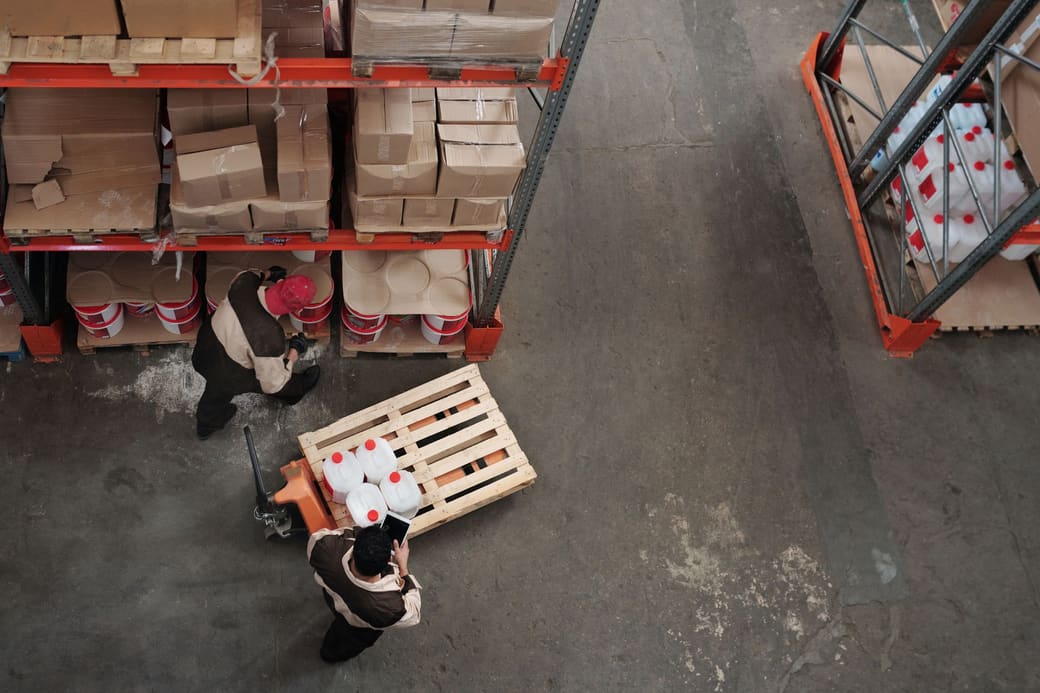
A 3PL, short for third-party logistics provider, is an outside company that handles a business’s goods without owning them. It might store the stock in its warehouse, pick and pack each order, ship it, or book the trucks and ships that carry it. The business that owns the goods pays for the service and keeps the inventory on its own books.
The “third party” is counted from the sale. The seller is the first party, the buyer is the second, and the logistics firm hired to get the goods from one to the other is the third. A company that runs its own warehouses and trucks does its logistics in house; a company that hands the work to a 3PL is outsourcing it. Plenty of companies split the work, keeping some in house and handing the rest out.
So what is a 3PL in plain terms? It is the warehouse and shipping department a company rents rather than builds. The rest of this page covers what the term means in law, what the work involves, how many people do it, and what the jobs pay.
US law has a definition, and it is short. The Consumer Product Safety Act defines a third-party logistics provider as “a person who solely receives, holds, or otherwise transports a consumer product in the ordinary course of business but who does not take title to the product.” The Consumer Product Safety Improvement Act of 2008 wrote it into 15 U.S.C. 2052(a)(16).
Title is the test that matters. A distributor buys goods and resells them, so it owns what sits in its warehouse. A 3PL holds the same boxes on the same shelves but never buys them. The law draws the line for a practical reason: the next subsection says a third-party logistics provider “shall not, for purposes of this chapter, be deemed to be a manufacturer, distributor, or retailer of a consumer product solely by reason of receiving or transporting a consumer product in the ordinary course of its business.” In other words, a 3PL storing a recalled product is not treated as the company that made or sold it.
That definition sits in product-safety law, not in logistics regulation. Freight brokers and freight forwarders, which are often called 3PLs too, have their own definitions in transportation law, covered further down.
The Census Bureau’s description of the warehousing industry lists the services a 3PL sells. After the storage itself, it says: “They may also provide a range of services, often referred to as logistics services, related to the distribution of goods.” Then it names them:
A typical client relationship works like this. The client’s suppliers ship inventory to the 3PL’s building. The 3PL receives it, checks it against the purchase order and stores it. When a customer orders, the client’s system passes the order to the 3PL, whose staff pick the items, pack them, label the box and hand it to a carrier. Returns come back to the same building. The client pays for storage by the pallet or the shelf, and for handling by the order or the item.
Some 3PLs do one of these jobs; the larger ones sell all of them, plus the transportation, the customs paperwork and the software that tracks it. That breadth is why the term is loose: a parcel fulfillment center, a refrigerated food warehouse and a freight brokerage can all call themselves 3PLs.
The federal industry classification, NAICS, has no code for third-party logistics. A 3PL is classified by what it mainly does, which puts most of them in one of two places:
| Industry | What Puts A 3PL Here |
|---|---|
| Warehousing and Storage (493) | It stores the goods. Census says establishments in this industry group always provide warehousing or storage services in addition to any logistic services. |
| Freight Transportation Arrangement (488510) | It books the freight without storing it: establishments primarily engaged in arranging transportation of freight between shippers and carriers. Census adds that these firms offer a combination of services spanning transportation modes but do not directly provide shipping services. |
US Census Bureau, 2022 NAICS definitions.
Neither industry is made up only of 3PLs. A grain elevator sits in warehousing, and a customs brokerage in freight arrangement. But these are the industries where 3PL work shows up in federal statistics, so they are the closest thing to a measure of it. Census says the firms in freight arrangement are “usually known as” freight forwarders, marine shipping agents, or customs brokers.
BLS counts jobs in both industries every month. Warehousing and storage employed 1,838,500 people in July 2026, up 96% from 935,900 in July 2016. It peaked in 2022 and has eased since. Freight transportation arrangement is far smaller and grew more slowly, from 212,000 to 267,500 (+26%).
| Year | Warehousing And Storage | Freight Arrangement |
|---|---|---|
| 2016 | 935,900 | 212,000 |
| 2017 | 1,029,200 | 216,500 |
| 2018 | 1,141,900 | 230,300 |
| 2019 | 1,240,600 | 243,200 |
| 2020 | 1,386,600 | 227,200 |
| 2021 | 1,701,900 | 243,600 |
| 2022 | 1,920,200 | 270,400 |
| 2023 | 1,821,400 | 271,000 |
| 2024 | 1,871,100 | 266,500 |
| 2025 | 1,869,300 | 262,300 |
| 2026 | 1,838,500 | 267,500 |
BLS Current Employment Statistics, all employees, seasonally adjusted, series CES4349300001 and CES4348850001. July each year; later 2026 months were still preliminary when read.
These counts take in everyone on the payroll, from forklift drivers to finance staff. The next sections narrow them to the occupations a supply chain or logistics degree leads to.
The numbered terms describe who does the logistics work. They are industry shorthand, not legal or statistical categories, and people use them loosely, but the common meanings line up like this:
| Model | Who Does The Work | Example |
|---|---|---|
| 1PL | The company that owns the goods, with its own staff, buildings and vehicles. | A brewery delivering kegs in its own trucks. |
| 2PL | A carrier that moves the goods on its own assets. | A trucking company or an ocean line. |
| 3PL | An outside firm that runs storage, fulfillment or transportation for the owner. | A fulfillment center packing orders for several online stores. |
| 4PL | An outside firm that manages the owner’s whole logistics network, including the 3PLs and carriers. | A logistics manager contracted to run a retailer’s distribution end to end. |
The line between a 2PL and a 3PL is ownership of the job, not of the trucks. A carrier moves what it is given; a 3PL decides how the goods should move and arranges it, using its own vehicles or someone else’s.
A 3PL does logistics work. A 4PL manages it. The 4PL is hired to run a company’s supply chain as a whole: it chooses the warehouses, the carriers and the 3PLs, sets the targets they work to, and answers to the client for the result. It usually owns no warehouses or trucks of its own, which is the point: it has no capacity to sell, so it can pick whichever provider fits.
In practice a client that hires a 4PL still has 3PLs in its network; the 4PL sits between them and the client. The model is built for a business with many warehouses, many carriers and many countries, where coordinating the providers has become a job in itself. A company with one warehouse partner deals with its 3PL directly.
For a career, the difference is the difference between running operations and planning them. 3PL jobs are mostly in the building and on the freight desk; 4PL work is closer to what a logistician or supply chain analyst does inside a large company.
Freight brokers and freight forwarders are often called 3PLs, and in everyday use they are. Transportation law treats them as separate businesses with separate definitions:
The practical difference is liability. A broker connects a shipper with a carrier and steps back; a forwarder takes the shipment on as its own from pickup to delivery. A 3PL in the narrow sense of the product-safety definition is a third thing again: it holds or moves the goods without owning them. The freight forwarder guide covers the forwarding job in depth.
BLS publishes wage figures for each occupation inside each industry, which shows where the supply chain jobs in 3PL work actually are. These four occupations employ the most people across the two industries:
| Occupation | In Warehousing | In Freight Arrangement | Share Of The Occupation |
|---|---|---|---|
| Freight agents | 2,200 | 53,390 | 57% |
| Warehouse and transportation managers | 21,430 | 6,440 | 13% |
| Production and expediting clerks | 15,820 | 2,170 | 5% |
| Logisticians | 8,400 | 8,550 | 7% |
BLS OEWS, May 2025, national industry-specific estimates (493100 and 488500); share is of the occupation’s national jobs.
Cargo and freight agents stand out: 55% of them work in freight arrangement alone. That is the occupation BLS files freight forwarders, freight brokers and logistics coordinators under, so for those jobs a 3PL is the main employer. Warehouse and transportation managers come next, mostly in warehousing; the warehouse manager guide covers that path.
Logisticians are the opposite case. Only 7% of them work in these two industries. Their largest employers are federal Executive Branch (33,470) and management of Companies and Enterprises (29,300): they plan logistics from inside the organizations that own the goods, which is closer to the 4PL side of the work.
The same survey reports each occupation’s median pay inside each industry, which lets you compare a 3PL job with the same job elsewhere:
| Occupation | In Warehousing | In Freight Arrangement | All Industries |
|---|---|---|---|
| Freight agents | $49,920 | $54,730 | $52,260 |
| Warehouse and transportation managers | $99,330 | $102,310 | $107,230 |
| Production and expediting clerks | $50,490 | $49,270 | $59,650 |
| Logisticians | $68,590 | $57,720 | $82,320 |
Same survey: national medians, and the industry columns from its industry-specific estimates.
The gap is widest for logisticians: a median $57,720 in freight arrangement, against $82,320 for the occupation as a whole, a difference of $24,600. For freight agents it runs the other way: $54,730 in freight arrangement, against $52,260 overall. So a 3PL is a better-paying home for some of these jobs than for others, and the table is worth reading row by row before choosing a first employer.
These are medians for an occupation in an industry, not for a job title at a particular company, and BLS does not split out 3PLs within either industry.
Many people start on the warehouse floor or a freight desk and move up. For freight agents, BLS lists a high school diploma as the typical entry education, with short-term on-the-job training. For the managers it lists a high school diploma plus 5 years or more of related work experience. A major in logistics or supply chain management teaches the inventory, transportation and warehousing methods 3PLs sell, which is what the step from the floor to the office asks for.
The logistics degree rankings list the bachelor’s and master’s programs named for the field, with their tuition and formats. The guide to logistics sets 3PL work beside the rest of the field, from transportation planning to purchasing.
A business that handles another company’s goods without owning them: it stores them, picks and packs orders, ships them or books the carriers that do. The client keeps ownership of the inventory and pays the 3PL for the service.
Third-party logistics. The first party is the company that owns and sells the goods, the second is its customer or the carrier, and the third is the outside firm hired to run the logistics in between.
An online store that rents no warehouse of its own and sends its stock to a fulfillment company, which stores it, packs each order and hands it to a parcel carrier. The fulfillment company is the 3PL.
A 3PL does logistics work: storage, fulfillment, transportation. A 4PL manages a company’s whole logistics operation, including the 3PLs and carriers it hires, and usually owns no warehouses or trucks itself.
Many people use the term that way, but the law separates them. 49 U.S.C. 13102(2) defines a broker as someone who arranges truck transportation for compensation, and the Consumer Product Safety Act names carriers, freight forwarders and third-party logistics providers as separate kinds of business.
Warehouse and distribution managers, logistics coordinators, freight forwarders and brokers, logisticians and expediting clerks. In BLS data, cargo and freight agents are the occupation most concentrated in the industries 3PLs are counted in.
The field 3PLs work in, the jobs across it, and the programs that teach it.
The management job inside a 3PL’s buildings, and the experience it takes.
The international side of freight arrangement: the path in and the pay.
How 3PLs and LTL carriers move freight across a dock without storing it.
The bachelor’s and master’s programs named for logistics, ranked.